
Monday, June 9, 2014
Preparing for El Nino 2014
El Nino is coming. For the Southeast Asia especially Indonesia, Malaysia, Singapore and Brunei, we will receive severe impact if it is a strong one.
Let's start preparing for the worst scenario! Infographic provided by marufish.com give a good insight on how we can prepare for the drought and haze of El Nino.


Thursday, May 31, 2012
Scholarship for Africa and LDCs on MSc in Carbon Finance at University of Edinburgh, UK
Scholarship available on world's first MSc in Carbon Finance
Applications are invited to join the MSc in Carbon Finance at the University of Edinburgh Business School, for the academic year commencing in September 2012.
One Deutsche Post DHL Scholarship worth £8,000 is available for students on the MSc in Carbon Finance who are normally resident in any country in Africa or any least developed country. The scholarship will be awarded on the basis of academic merit and the benefits to the student. Applicants must have received and accepted an offer of a place on the programme, and must apply for the scholarship no later than 2 July 2012.
The MSc in Carbon Finance focuses on the business opportunities and financial flows driven by society's response to climate change. Graduates will be equipped for a career in climate change investment, carbon markets, consulting, or related policy and regulatory roles. The programme includes specialist courses in energy finance, carbon markets, climate science and policy, carbon accounting and low-carbon investment, as well as a carbon consulting project and individual dissertation. Courses are taught by leading researchers and practitioners with extensive experience of energy, carbon and financial markets, and students will benefit from interactions with the University of Edinburgh's other world-leading Masters programmes in Carbon Management, Carbon Capture and Storage, Sustainable Energy Systems and Global Environment and Climate Change Law (note: further Deutsche Post DHL Scholarships are also available on these related programmes). The MSc in Carbon Finance particularly encourages applications from students with some relevant work experience.
For more information see http://www.business-school.ed.ac.uk/msc/carbon-finance
Saturday, March 17, 2012
why you have to say no to some cheap LED light bulb from China?
When I order the first batch of LED light bulb from Aliexpress.com, I was putting a high expeout this eco and energy saving goods. I choose the 7W instead of the most popular 5W LED corn type with the seller said it has MORE LED in the bulb. And I check the internet website saying 7W LED bulb can be equivalent to 20W CFL. So, I did some homework and study before the purchase. I am so confidence that this is the RIGHT bulb that I need. And start waiting for its long long delivery through Chia Air Mail.
The LED bulb arrived few weeks later. It is weakly packed. The first bulb that I checked, its top cover was loosen, and I need to fixed it myself. Still, I wish the light will be bright and nice. The first time I put the LED bulb into the E27 socket. It is working, and every of them working. However, I start noticing that the bulb is way too dim. The seller claim it has 650 Lm, but in reality it is just about half of that. It can't light up my room properly, and not as bright as the 18W CFL.
Later, I found the light turn out to be blueish, not like normal Day Light or Cool White. My room just become some fancy party type of atmosphere. After a while, I start to felt dizziness in my head. And it get worst. I suspect it is due to the new LED bulb. I change every of them back the normal CFL. The discomfort gone. Yes, this low quality LED bulb is the culprit.
The LED light become so hot after using for short time, it is not COLD as claim by the seller. The bulb is solely build by cheap plastic and whole thing felt like low grade plastic toys. Definately, this is a bad purchase.
As the price of LED bulb back in Alor Setar, Malaysia, still very expensive. Their quality is not promising as well because most are made in China too. However, I still not giving up to search for suitable LED bulb that satisfying.
I hope this review on the LED light bulb help some buyers to make more careful purchase in the future. Do share with me if you have any other findings on the LED bulb currently available in the market.
Review by marueco from Alor Setar, Malaysia.
An Eco lover that wish to be self sufficient.


Saturday, March 10, 2012
LED Light Bulb Cool White 220V E27 166 pieces LED


In order to reduce my house carbon footprint and to be environmental friendly, I decided to change the CFL light bulb to LED. It sounds great and energy cost saving too.
However, I am ready the rare example in Malaysia who plan to do this as we all "pandai kira-kira". The electrical cost is so cheap in Malaysia where it is subsidize by the Malaysian government. However, the price of the LED light sold here is far too expensive compare to CFL.
So, I went to check all local online shopping site looking for cheaper LED light bulb. Yet, the online seller are selling the China bulb way too expensive from their pricing back in the Land of Dragon.
At the end, I decided to purchase them from Chinese online shopping portal call Aliexpress, which is the sister site of Taobao, a very popular Chinese shopping portal.
In order to reduce any mistake done from the purchase, I purchase the LED in small quantity.
Some concern about purchasing China LED light bulb
1. They always over claim about their product just to reach sales.
2. Product information always not clear or faulty, especially the beautiful photos.
3. Too many non branded LED where quality is a question
4. There might be lost or damage in the transportation.
I solely depends on the buyer reviews and some accreditation mark to decide from which shop to make the deal. Unfortunately, most buyer seldom give clear and good feedback. This is the weak point compare to Amazon.com
So, I pick on of the top seller to made my order. And I choose the delivery from Hong Kong, where based on my pass experiance, shipping from Hong Kong is faster. The order is 10 pieces of 360° 7W 220V E27 166 pices cold white LED blub. It reach Malaysia within 2 weeks, far much faster than another order from China, which is yet to received even after a month.
The purchasing experiance is nice until I received the goods. .....
To be continue.......
Friday, March 9, 2012
Energy Saving LED light or CFL?
How many light bulb do you have in your house? Unfortunately, there are nearly 80 of them in my house. All are CFL type, which 5 years ago, it is sounds very "environmental friendly". (Please check my old article about CFL usage in Bangladesh). However, now day, people realize that in fact it is not that environmental friendly and having similar risk as the normal Florescent light where it contain mercury.
The CFL is mean to stand about 5000-8000 hours, however in reality the CFL bulb in my house seldom last 2 years. CFL bulb replacement is happening every now and then. Luckily, the cost of CFL bulb is not that expensive, around RM13-18 each. However, the trouble occur when the replacement of the CFL bulb, where it always broken easily when unscrewing them and cause the contamination of mercury indoor. With the current blooming of cheap LED light, I am very keen to replace all my light bulb to this "Low Risk" and "Energy Saving" light bulb.
I did some study on the LED light in the local market. I noticed that the price tag of the branded LED light is 5-6 times higher than CFL. The Philips LED light bulb cost more than RM90 in TESCO. When visiting local wholesale electrical shop, 9W Philips cost RM78, while 5W Philips LED light cost RM68. Still, it is far too expensive as the "long lasting" feature is yet to be proven. Panasonic LED light blub claim it can be used for 40 years (of course testing with very limited usage per day).
In the process of sourcing reasonable LED light, I brought some samples from local wholesale electrical shop, where 3W LED light bulb cost RM18, while 4W cost RM 28. Both of them are too dim and unable to reach the similar level of lumens (Lm) emitted by CFL. Then, I order some LED light bulb from China, 7W 166 piece of LED Cool White, is cost RM 18 each. The shipping from China took about one month.
When open the box, the seller just did a very poor job where its packaging is rather too simple and post high risk of damage goods. The LED light looks solid on the screen, however, it is actually build with plastic parts and very fragile. Tested the first batch of the LED light and they work perfectly fine. However, the 7W light bulb still not in par with the 13W CFL, and the cool white LED emitted blueish light. As I already get use to the bright CFL, these LED still feel a bit dim to me.
After turn on the LED light for a few second, I start noticing some dizziness with the light. I know that some people is sensitive the CFL and it cause some sickness symptoms, however, I am fine with CFL. But, these LED did cause dizziness and nausea to me. I am not sure if the blueish light cause the problem or its flipping frequency is annoying me. I will probably unable to find the answer and the only solution is to replace the LED back to CFL again.
But, how to deal with all the LED bulbs that cost me a few hundred buts to shipped from China? Probably will place it some strategic location to prevent the unwanted visitors.
Friday, February 24, 2012
Looking for Home Solar Kit in Malaysia
Solar Powered Your Home? Everyday when I look at the sun shinning into my house, I always wondering how to make it power my electrical appliances to save the electric cost. And the chance come by now, I will be moving into a new house and it is still under renovation.
Since last January, I have been spending time to source the suitable Solar Home Kit in the internet. Many hits went to the China made system which is has very "reasonable" price that fit my budget to start my solar home dream. However, after considering the difficulties in the logistic of product import, warranty, installation, and lack of confidence of the China supplier. I decide to look for the solar kit in Malaysia.
Malaysia government just starting the FIT system in 2012, and it really helps to boots the number of people looking to make good investment in selling their green power. There are quite a number of company providing the services and products. However, they are likely to be more on the On-Grid and non of them located near my place, which is a small town at the north. After spending weeks of searching, I have listed a few company that can provide small stand alone solar system.
In Malaysia, your google search on solar related keywords will lead you to one local company called Solar Power Mart (solarpower-mart.com/), and SCorigin (www.scorigin.com), which looks like a same company. They provide very comprehensive information and YouTube movies on their solar system. It is a very resource full website.
Searching the online market place did help me to locate some potential solar supplier. In Mudah.my, I found Pg Solar and a few companies who provide solar kit and products. There a quite a number of active sellers from Sabah and Sarawak as well. I think the east Malaysia has a better solar market than Peninsular as there are many remote areas not well connected.
The story will continue............
Wednesday, March 2, 2011
PRE-DOCTORAL FELLOWSHIPS IN AFRICAN CLIMATE CHANGE AND POLITICAL STABILITY
PRE-DOCTORAL FELLOWSHIPS IN AFRICAN CLIMATE CHANGE AND POLITICAL STABILITY
CALL FOR APPLICATIONS
------------------------------
DEADLINE: 31 MARCH 2011------------------------------
The Climate Change and African Political Stability (CCAPS) program at the LBJ School of Public Affairs at the University of Texas at Austin will offer up to three pre-doctoral fellowships for the 2011-2012 academic year. The CCAPS pre-doctoral fellowship program aims to stimulate the development of the next generation of researchers and thought leaders on the topic of climate change and political stability in Africa.
ELIGIBILITY: Pre-doctoral fellowships are available to advanced PhD students, with preference given to those who have made substantial progress towards the completion of their dissertation. U.S. and international PhD students are encouraged to apply.
CCAPS will consider applicants working on a broad range of topics related to climate change, political stability, and security in Africa. Suitable topics may include, but are not limited to: climate change vulnerability in Africa; potential impacts of climate change on political stability or security in Africa; and strategies for addressing climate change challenges in Africa.
The call for applications and information about the fellowship and application guidelines are available at: http://ccaps.strausscenter.
Full scholarship for MSc in Climate Change and Development
Full scholarship for MSc in Climate Change and Development at University of Sussex/Institute for Development Studies, UK
A full scholarship (fees plus maintenance and travel) funded through the Commonwealth Shared Scholarship scheme is available for applicants to the MSc in Climate Change and Development programme for entry October 2011.
Note: Potential applicants must undertake the following process in the order stated.
1. Check their eligibility for the award (see criteria below)
2. Submit an application for the MSc in Climate Change and Development using the online application facility at http://www.sussex.ac.uk/study/
3. Only after applicants have received an offer of a place on the course should they request an application form for the scholarship, be contacting climate@sussex.ac.uk. The deadline for applications for the scholarship is 1st May 2011.
Scholarship Criteria
Applicants must
(i) be nationals of (or permanently domiciled in) a Commonwealth developing country, and not currently be living or studying in a developed country (please see the booklet for a list of eligible countries)
(ii) hold a first degree at either first or upper second class level;
(iii) be sufficiently fluent in English to pursue the course
(iv) have not previously studied for one year or more in a developed country
(v) not be employed by a government department (for this purpose the Commission counts this as being employed by a Government Ministry).
(vi) be able to confirm in writing that neither they or their families would otherwise be able to pay for the proposed course of study
(vii) be willing to confirm that they will return to their home country as soon as their period of study is complete
Further information
(i) MSc in Climate Change and Development
This is unique course that aims to provide state-of-the-art training for the rapidly expanding market for development professionals with specialisation in climate change. The programme is strongly multidisciplinary and students will acquire specialist knowledge of the causes of climate change, the implications for developing countries, and the policy and practice of efforts to mitigate and adapt to a changing climate. Courses are taught by leading researchers in these fields from the world renowned Institute for Development Studies (IDS), the Geography Department and Science and Technology Policy Research Unit (SPRU).
<http://www.sussex.ac.uk/
<www.sussex.ac.uk/
Tel: +44 (0)1273 877686
Email: climate@sussex.ac.uk
(ii) Commonwealth Shared Scholarship
For full details of the Commonwealth Shared Scholarship scheme see http://www.cscuk.org.uk/docs/
Thursday, December 16, 2010
PIFWA Mangrove Educational Center
Penang Inshore Fishermen Welfare Association (PIFWA)
Penang Inshore Fishermen Welfare Association (PIFWA) is one of the local Malaysian NGO working on protecting the benefits of local fishermen and actively conducting the mangrove planting activities. Currently, PIFWA is working with NGOs and government to establish a Mangrove Educational Center.


Resource:
http://geic.hq.unu.edu/ENV/Files/2008/SPA.pdf
http://geic.hq.unu.edu/ENV/files/InnComm%20Report/case%20study%203%20Malaysia.pdf
PIFWA Photos:
http://www.flickr.com/search/?q=pifwa&w=8819274%40N04&ss=2&z=m
Penang Inshore Fishermen Welfare Association (PIFWA) is one of the local Malaysian NGO working on protecting the benefits of local fishermen and actively conducting the mangrove planting activities. Currently, PIFWA is working with NGOs and government to establish a Mangrove Educational Center.
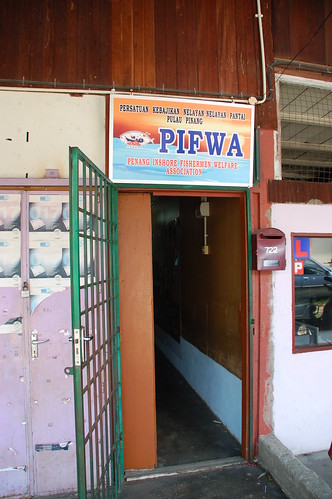
PIFWA Office
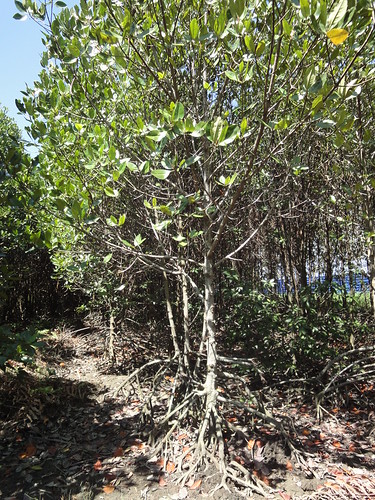
7 years old mangrove after replanted by PIFWA at the abundant Shrimp Pond
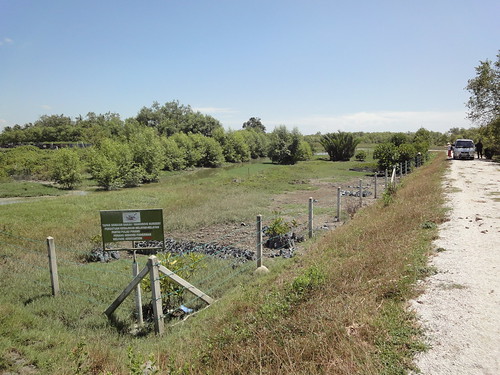
PIFWA Mangrove Nursery
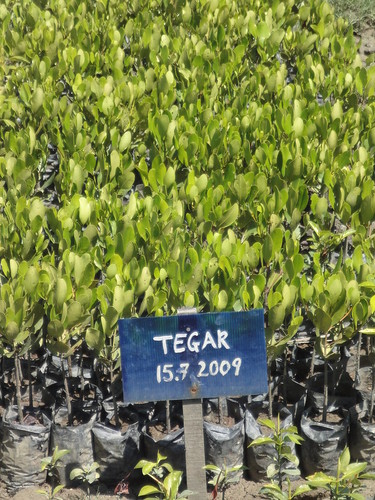
Young mangrove plant at the nursery

Mangrove replanting project at Nibong Tebal

Mangrove replanting project at Seberang Jaya

Proposed site for Mangrove Educational Center
Resource:
http://geic.hq.unu.edu/ENV/Files/2008/SPA.pdf
http://geic.hq.unu.edu/ENV/files/InnComm%20Report/case%20study%203%20Malaysia.pdf
PIFWA Photos:
http://www.flickr.com/search/?q=pifwa&w=8819274%40N04&ss=2&z=m
Penang's Mud Ball Campaign - Sungai Nibong Kecil
Sungai Nibong Kecil Mud Ball Throwing
Sungai Nibong Kecil located at Bayan Baru is one of the polluted river in this Industrial Area. When I was young, I used to catch the mud crab, fishes in that river, chasing the monitor lizard, however, it is seriously polluted now. I am wondering if we can still find any creature in this river.
The Penang State of Malaysia is now turning into leader of Greening Campaign. One of the popular campaign is throwing the EM contain mudball into the polluted river for cleaning purposes. EM™ stands for "Effective Microorganisms™" and was coined by Professor Dr. Teruo Higa, who developed EM™. EM™ consists of a wide variety of effective, beneficial and non-pathogenic microorganisms produced through a natural process and not chemically synthesized or genetically engineered. (http://emrojapan.com/about-em/about-em.html)
In Bayan Baru, the mudball campaign is supported by the company operating in the Free Trade Zone, which show their Corporate Social Responsibility to the local society. It was indeed an encouraging sign for the environmental awareness raising in this area.
Applying the EM Mudball for river cleansing is rather a long term process and need strong and consistent commitment. This will be the real challenge as there is a need to build long-term partnership within the acting parties. In such a case, the leading role of the government is important for the partnership to sustain.
Resource:
http://www.scribd.com/doc/33020658/Should-EM-Mudballs-Be-Used-for-Treating-Rivers-and-Seafro
http://emrojapan.com/about-em/em-products/activated-materials/howtomakeballs.html
Making Mudball for Malaysia
http://www.scribd.com/doc/17521409/Membuat-Em-Mud-Ball-Bagi-Pengurangan-Pence-Mar-An-Melalui-Kitar-Semula-Sisa

Sungai Nibong Kecil

Rubbish Floating on the river


Pollution from domestic discharge
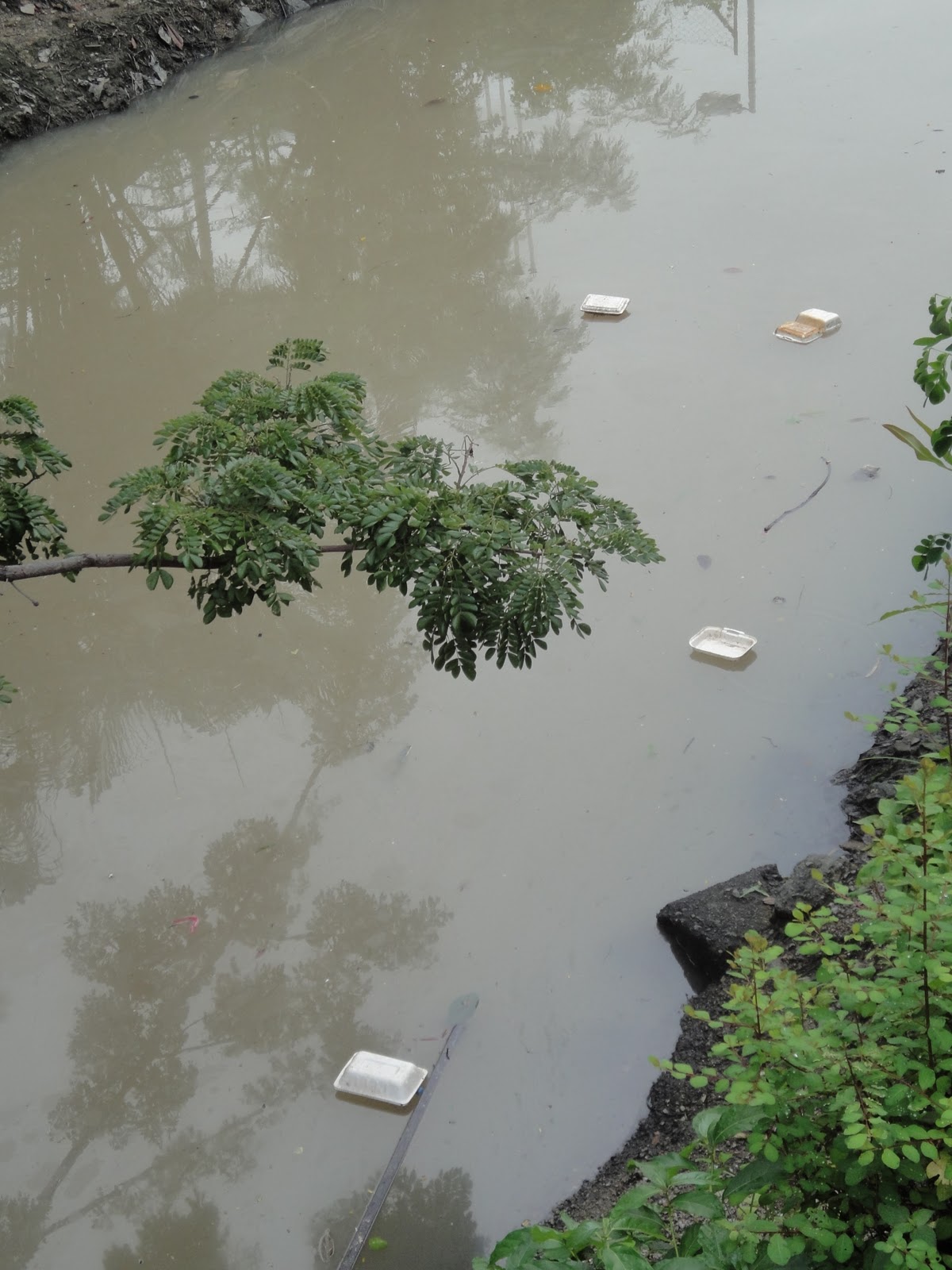
Floating Food Container on the river


Petronas Station at Sungai Nibong Kecil


Oil discharge from the Petronas Station


Stop the Pollution


Environmental Monitoring by PSDC


Blackish water discharge from domestic source
Saturday, October 30, 2010
マレーシア・ペナン―漁民とともにマングローブを植える旅
マレーシア・ペナン―漁民とともにマングローブを植える旅
期間:
2010年12月19日(日)~25日(土) 7日間
内容:
マレーシア・ペナンの美しい町並みは、19世紀の英国植民地の面影を今に伝え、世界遺産にも指定されています。中国系、インド系、マレー系住民という多民 族によって構成されるこの地は、食も、建築も、宗教も、言語も多彩です。自然に恵まれ、東洋の真珠ともいわれるこの島は、アジアでも有数の海浜リゾートと しても知られていますが、ここ数年、急激な開発と人口の増加により、河川や海岸の汚染がひどくなってきてもいます。そんななか伝統的な漁法を守り、マング ローブ植林、手長エビの稚魚放流などの環境保全活動に取り組んでいる漁民のグループ(PIFWA)がいます。この開発の波に直面する漁民たちを訪ね、その マングローブ植林に参加し、自然と人間がともに生きていくための知恵や方法を考えます。
*パルシックは、2010年より、この活動への支援を行っています。
ツアーのポイント:
★世界遺産にも登録されたジョージタウンの街散策
★多文化・多宗教が共生するペナンの魅力的な食事
★東南アジアの環境問題について分かりやすく学べるプログラム
旅行条件:
1. 旅行期間:2010年12月19日(日)~25日(土)
2. 旅行代金:179,800円
*往復航空運賃(成田⇔ペナン)、
全行程宿泊費、食費、全行程移動費、
入国税・空港税等含む
3. 最少催行人数:5名
4. 出発空港:成田空港
5. 添乗員:なし。プログラム企画担当者が同行
6. 利用ホテル/宿泊先:Cititel Hotel
7. 利用航空会社:マレーシア航空/シンガポール航空
8. 食事 全行程食事付(ホテル食、食堂など)
旅行日程:
■12月19日
成田発/ペナン空港着
■12月20日
(午前)世界遺産に登録された歴史あるジョージタウンの街を、ペナン出身の活動家、アンワール・ファザール氏と散策
(午後)PMペナンの歴史を学ぶ
■12月21日
(午前)漁民団体PIFWAを訪問・PIFWAリーダーや漁民の人々から活動についての話を聞く
(午後)沿岸漁民による伝統的漁法を見学
■12月22日
PIFWAが取り組むマングローブ植林活動に参加
■12月23日
(午前)エビの放流見学
(午後)ペナン市内観光
■12月24日
(午前)ペナン市内観光
(午後)自由行動後、ペナン発
■12月25日
成田着
*以上は、現地側の都合などによって変更になる場合があります
★第1回申込締切 2010年11月18日(木)
Saturday, October 16, 2010
CBD/COP10 side event - Satoyama Governors’ Summit
CBD/COP10 side event - Satoyama Governors' Summit
by GEOC (satoyama@geoc.jp)
Date & Time: 20 October, 2010, 13:15-14:30
Location: Interactive Fair Tent of Japan, Shirotori Park, Nagoya Congress Center 1-1 Atsutanishicho, Atsuta-ku, Nagoya-shi, Aichi, Japan Access Map »
Language: English and Japanese simultaneous interpretation
*No pre-registration required
Note: This event is free and open to all. Participants with an official accreditation pass for COP10 can enter the venue without pre-registration. For those without an official accreditation pass for COP10 can also attend the meeting by making registration from the online form below. Seating capacity for non-accreditation holders is 100 maximum.
Governors, academics and experts will present advanced approaches for appropriate use and conservation of Satoyama and Satoumi, the traditional secondary natural systems maintained by farmers and fishermen for centuries, and their contribution to the revitalization of local communities.
The conclusions of the Biodiversity Governors' Summit on the use of Satoyama and revitalizing local communities, which will be held on 19 October in Nagoya, will be presented at this event for consideration by policymakers, academics, members of business community, NGO/NPOs and citizens participating in the tenth meeting of the Conference of the Parties to the Convention on Biological Diversity (CBD/COP10).
The establishment of a local biodiversity strategic vision, the implementation of forest management through a specific local tax system, and how we can activate communities which are influenced by the serious impacts of globalization and aging through the development and cultivation of Satoyama and Satoumi ecosystems will be also discussed.
Renewed and creative action on the appropriate use and conservation of secondary natural environments such as Satoyama and Satoumi and their role in revitalizing local communities is particularly timely now and will only become more crucial in a post-COP10 world.
Download:
You can download the poster in pdf format from the link below.
Satoyama Governors' Summit Poster (PDF 1.3MB)
Biodiversity Governors’ Summit (BGS) : Satoyama/Satoumi Use and Conservation - Revitalizing Local Communities
CBD/COP10 related event
Biodiversity Governors' Summit (BGS) : Satoyama/Satoumi Use and Conservation - Revitalizing Local Communities
Biodiversity Governors' Summit (BGS) : Satoyama/Satoumi Use and Conservation - Revitalizing Local Communities
by GEOC (satoyama@geoc.jp)
Last updated 2010-09-18 17:37:08.0
Last updated 2010-09-18 17:37:08.0
Date & Time: 19 October, 2010, 15:00-18:00
Location: Midland Hall, 5F Midland Square, 4-7-1 Meieki, Nakamura-ku, Nagoya-Shi, Aichi, 450-6205, Japan Access Map »
Language: English and Japanese simultaneous interpretation
*Pre-registration required
Humanity has been blessed with a wide range of benefits from biologically diverse ecosystems including the provision of food, clothing, wood, pharmaceutical products and natural disaster prevention. Global biodiversity, however, is in serious danger due to human activities such as large scale development, the overexploitation of natural resources, the introduction of alien species, and a lack of appropriate maintenance of secondary nature such as Satoyama which needs to be developed and maintained sustainably.
The tenth meeting of the Conference of the Parties to the Convention on Biological Diversity (CBD/COP10) will be held in October, 2010 in Nagoya, Aichi. The Biodiversity Governors' Summit, an international symposium, will be held on 19 October in which governors and vice governors from Aichi, Ishikawa, Hyogo, Shiga and Shizuoka as well as academics and experts, will present their approaches and actions for the conservation of Satoyama and Satoumi and its contribution to the revitalization of local communities. Participants will also discuss how we can activate communities which are influenced by the serious impacts of globalization and aging through the development and cultivation of Satoyama and Satoumi ecosystems.
The results of the Summit will be presented to decision makers, academia, business community, NGOs/NPOs and citizens at a CBD/COP10 side event at Interactive Fair Tent of Japan in Shirotori Park on 20th September.
Registration:
Please register by 13 October. We may stop accepting the registration before 13 October when we reach the seat capacity. To register online, please complete the registration form available at the link below.
To register by e-mail, please type your (1) Name, (2) Name of your Organization, (3) Sector of your Organization, (4) your region or Nation, and e-mail to satoyama@geoc.jp .
Download:
You can download the poster in pdf format from the link below.
Biodiversity Governors' Summit Poster (PDF 2.0MB)
Farmers in a changing climate: Does gender matter?
Farmers in a changing climate: Does gender matter?
Food security in Andhra Pradesh, India
The report provides concrete evidence of how gender roles and gender-differentiated access to resources shape men and women's perceptions and experiences of climate variability, as well as their coping strategies and related institutional support. Recommendations for addressing gender issues in the context of climate change adaptation, particularly with regard to food security and farming-based livelihoods are made; the methodological approach and tools are also discussed in detail.
The report is a result of a multi-year research project carried out by an international, multidisciplinary team and can be downloaded here: http://www.fao.org/docrep/013/i1721e/i1721e00.htm
For further information and collaboration, please visit the project website http://www.fao.org/climatechange/54818/en/ and/or contact the authors.
Africa Climate Change Resilience Alliance - ACCRA adaptive capacity framework
The Africa Climate Change Resilience Alliance has launched the consultation version of the ACCRA adaptive capacity framework.
ACCRA is an exciting and ambitious consortium working to improve our understanding of adaptive capacity. We have developed an innovative 'adaptive capacity framework' which we are consulting on, and we are currently using it as a conceptual tool for research on existing Disaster Risk Reduction, Social Protection and Livelihoods programme interventions in Ethiopia, Uganda and Mozambique.
The ACCRA framework has the potential to be used in a number of different contexts, and for a range of purposes - for example to mainstream climate change adaptation, for design or evaluation purposes. We are already looking at how it can be used in ACCRA members' policy and programming work, but our ambition is for it to be used much more widely. We have already consulted extensively with governments, civil society members and of course ACCRA members in Ethiopia, Uganda and Mozambique on our framework. We would now like to hear your views! Please click here to download the consultation document and follow the guidance to send us your comments.
To find out more about ACCRA, join the ACCRA community at http://community.eldis.org/accra/ and receive updates on our research findings, our policy recommendations and the evolution of our adaptive capacity framework.
ACCRA is funded by DFID, the Department for International Development.
The Royal Society new project: People and the Planet
The Royal Society recently launched its new project: People and the Planet: the role of global population in sustainable development and is now seeking evidence to inform the study.
§ The Royal Society science policy centre Population study aims are to provide policy guidance to decision makers and inform interested members of the public based on a dispassionate assessment of the best available evidence. The scope of the study will be global and it will explicitly acknowledge regional variations in population dynamics. It will consider the implications of population decline as well as growth.
§ We are particularly interested in receiving evidence from the Oceans community on:
§ country/regional population trends (migration, urbanisation, population density etc) and implications for ocean resources;
§ the implications of these trends for national and international sustainable development objectives;
§ evidence relating to human population changes (ie fertility rates, mortality, urbanisation, migration) and interactions/feedbacks with the natural environment and natural resource availability and quality (eg biodiversity, fisheries, etc). Here we are also interested in how the ocean environment and ocean resources can influence population;
§ Case studies or examples of where policies, economics, social or cultural influences have had positive or negative impacts on population at the country or regional level.
More information about the study, and the call for evidence, can be found on our website: http://royalsociety.org/People-and-the-Planet/
The original deadline for submissions was 1 October, however submissions are still being accepted.
The study is due to be completed in early 2012.
Climate Change Adaptation in Africa
The Climate Change and African Political Stability program at the Robert S. Strauss Center for International Security and Law released two new publications on climate change in Africa:
The program also recently issued a Call for Papers on Environmental Security for African Scholars, co-sponsored by the Strauss Center, the Institute for Security Studies, and the Pew Center on Global Climate Change. More information is available at: http://ccaps.strausscenter.org/news/article/call-for-papers-on-environmental-security.
- Locating Climate Insecurity: Where are the Most Vulnerable Places in Africa?: http://ccaps.strausscenter.org/system/research_items/pdfs/19/original.pdf?1286296660
- International Development Assistance for Climate Change Adaptation in Africa: The Aid Scramble: http://ccaps.strausscenter.org/system/research_items/pdfs/35/original.pdf?1286823400
The program also recently issued a Call for Papers on Environmental Security for African Scholars, co-sponsored by the Strauss Center, the Institute for Security Studies, and the Pew Center on Global Climate Change. More information is available at: http://ccaps.strausscenter.org/news/article/call-for-papers-on-environmental-security.
Tuesday, October 12, 2010
IEA releases latest estimates on CO2 emissions from fuel combustion
IEA releases latest estimates on CO2 emissions from fuel combustion
6 October 2010
In the lead-up to the UN climate negotiations in Cancún, the latest information on the level and growth of CO2 emissions, their source and geographic distribution will be essential to lay the foundation for a global agreement. To provide input to and support for the UN process the IEA is making available for free download at http://www.iea.org/co2highlights the Highlights version of CO2 Emissions from Fuel Combustion. This annual publication contains estimates of CO2 emissions by country from 1971 to 2008 and selected indicators such as CO2/GDP, CO2/capita, CO2/TPES and CO2/kWh.
FIELD - new paper on Climate Change Litigation
Climate-vulnerable developing nations could use international law to break the current deadlock in the intergovernmental negotiations on climate change by taking industrialised nations to court. Read the new FIELD briefing paper on Climate litigation - summary or full paper at:
http://www.field.org.uk/news/climate-litigation
The publication comes as government officials from around the world gather in Tianjin, China for three days of negotiations under the United Nations Framework Convention on Climate Change (UNFCCC).
"A large part of the relevant legal literature suggests that the main polluting nations can be held responsible under international law for the harmful effects of their greenhouse-gas emissions," says the paper's author, lawyer Christoph Schwarte.
"As a result affected countries may have a substantive right to demand the cessation of a certain amount of emissions. In selected cases they also have the procedural means to pursue an inter-state litigation in an international judicial forum such as the International Court of Justice in The Hague."
Schwarte's paper outlines a possible legal argument for such a lawsuit and offers some observations on the potential impacts of bringing a case before an international court or tribunal.
While there are various substantive and procedural legal hurdles, under certain circumstances litigation under public international law would be possible and could become a bargaining chip in the negotiations.
"Today, a credible case for inter-state litigation on climate change can be made," says Schwarte. "Developing country governments are understandably reluctant to challenge any of the big donor nations in an international court or tribunal. But this may change once the impacts of climate change become even more visible and an adequate agreement remains wanting."
FIELD analyzed the current legal discourse and has summarized its findings in a longer working paper, which it has made available online as an open wiki document to allow legal academics and practitioners to comment on, criticise or strengthen the arguments.
"While international judicial organs are unlikely to issue hard hitting judgments, climate change litigation may help to create the political pressure and third-party guidance required to re-invigorate the international negotiations, within or outside the UNFCCC," says Schwarte.
Since the failed Copenhagen summit in 2009, there has been limited progress in the UNFCCC climate negotiations. At the current rate of progress, a new legal framework and ambitious emission reductions look unlikely in the near-term.
As a result billions of extra tons of carbon dioxide and other greenhouse gases will be released into the atmosphere, and many scientists warn that this means global temperatures could rise by 4 degrees Celsius by the end of the century.
Joy Hyvarinen, Director of FIELD says 'Progress in the international climate change negotiations is nowhere near enough to reduce greenhouse gas emissions to a safe level. Something new is needed to push the negotiations forward. Perhaps an international court case could help bring new momentum to the negotiations.'
For more information, please contact:
FIELD
www.field.org.uk
field@field.org.uk
3 Endsleigh Street
London WC1H 0DD
T: +44 (0)20 7872 7200
F: +44 (0)20 7388 2826
UNFCCC CDM International Photo and Video Contest 2010
There are only two weeks to go in the UNFCCC/CDM International Photo and Video Contest 2010. The contest is a great way for registered Clean Development Mechanism projects to present their accomplishments to the world, and a great way to publicize the benefits of this unique mechanism. For photographers and digital video producers, it is a great way to gain international exposure and recognition.
Don't miss this valuable opportunity. Go to <https://cdm.unfccc.int/contest/index.html> to learn more and to submit your photos and videos.
Entries will be accepted until midnight GMT, 20 October 2010.
Thank you and very best regards,
Your CDM Team
Don't miss this valuable opportunity. Go to <https://cdm.unfccc.int/contest/index.html> to learn more and to submit your photos and videos.
Entries will be accepted until midnight GMT, 20 October 2010.
Thank you and very best regards,
Your CDM Team
Subscribe to:
Posts (Atom)