Thursday, December 16, 2010

PIFWA Mangrove Educational Center

Penang Inshore Fishermen Welfare Association (PIFWA)

Penang Inshore Fishermen Welfare Association (PIFWA) is one of the local Malaysian NGO working on protecting the benefits of local fishermen and actively conducting the mangrove planting activities. Currently, PIFWA is working with NGOs and government to establish a Mangrove Educational Center.

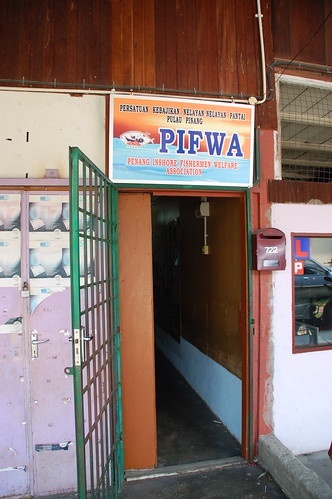
PIFWA Office


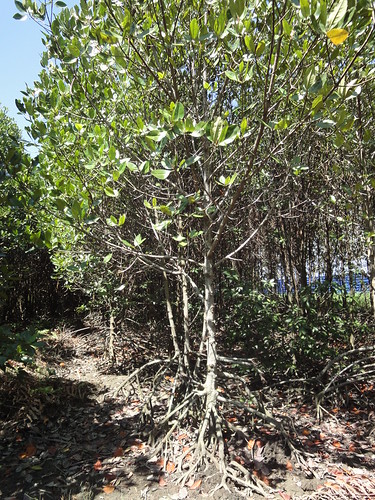
7 years old mangrove after replanted by PIFWA at the abundant Shrimp Pond


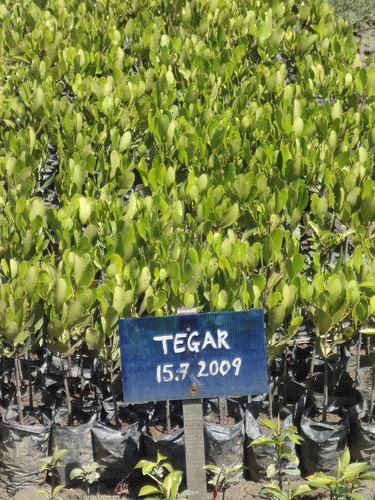
PIFWA Mangrove Nursery

Young mangrove plant at the nursery


Mangrove replanting project at Nibong Tebal


Mangrove replanting project at Seberang Jaya

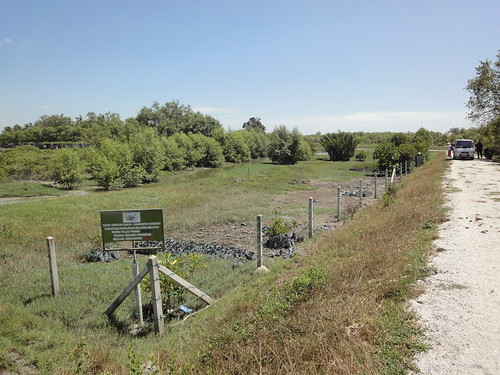
Proposed site for Mangrove Educational Center


Resource:
http://geic.hq.unu.edu/ENV/Files/2008/SPA.pdf
http://geic.hq.unu.edu/ENV/files/InnComm%20Report/case%20study%203%20Malaysia.pdf

PIFWA Photos:
http://www.flickr.com/search/?q=pifwa&w=8819274%40N04&ss=2&z=m

Penang's Mud Ball Campaign - Sungai Nibong Kecil

Sungai Nibong Kecil Mud Ball Throwing

Sungai Nibong Kecil located at Bayan Baru is one of the polluted river in this Industrial Area. When I was young, I used to catch the mud crab, fishes in that river, chasing the monitor lizard, however, it is seriously polluted now. I am wondering if we can still find any creature in this river.

The Penang State of Malaysia is now turning into leader of Greening Campaign. One of the popular campaign is throwing the EM contain mudball into the polluted river for cleaning purposes. EM™ stands for "Effective Microorganisms™" and was coined by Professor Dr. Teruo Higa, who developed EM™. EM™ consists of a wide variety of effective, beneficial and non-pathogenic microorganisms produced through a natural process and not chemically synthesized or genetically engineered. (http://emrojapan.com/about-em/about-em.html)

In Bayan Baru, the mudball campaign is supported by the company operating in the Free Trade Zone, which show their Corporate Social Responsibility to the local society. It was indeed an encouraging sign for the environmental awareness raising in this area.

Applying the EM Mudball for river cleansing is rather a long term process and need strong and consistent commitment. This will be the real challenge as there is a need to build long-term partnership within the acting parties. In such a case, the leading role of the government is important for the partnership to sustain.

Resource:
http://www.scribd.com/doc/33020658/Should-EM-Mudballs-Be-Used-for-Treating-Rivers-and-Seafro
http://emrojapan.com/about-em/em-products/activated-materials/howtomakeballs.html

Making Mudball for Malaysia
http://www.scribd.com/doc/17521409/Membuat-Em-Mud-Ball-Bagi-Pengurangan-Pence-Mar-An-Melalui-Kitar-Semula-Sisa

Sungai Nibong Kecil

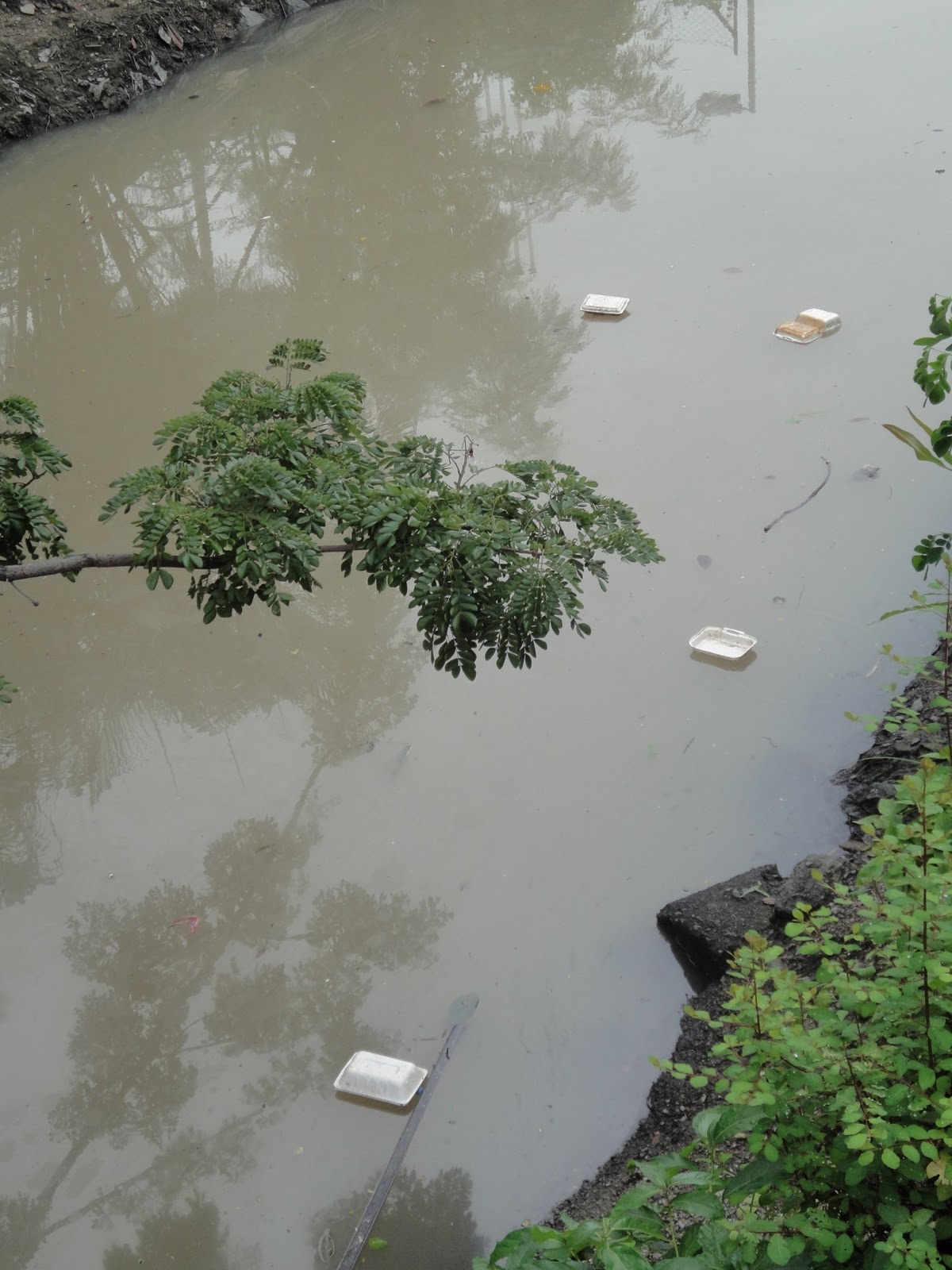
Rubbish Floating on the river


Pollution from domestic discharge

Floating Food Container on the river


Petronas Station at Sungai Nibong Kecil


Oil discharge from the Petronas Station


Stop the Pollution


Environmental Monitoring by PSDC


Blackish water discharge from domestic source

Saturday, October 30, 2010

マレーシア・ペナン―漁民とともにマングローブを植える旅

マレーシア・ペナン―漁民とともにマングローブを植える旅

期間:
2010年12月19日(日)~25日(土) 7日間

内容:
マレーシア・ペナンの美しい町並みは、19世紀の英国植民地の面影を今に伝え、世界遺産にも指定されています。中国系、インド系、マレー系住民という多民 族によって構成されるこの地は、食も、建築も、宗教も、言語も多彩です。自然に恵まれ、東洋の真珠ともいわれるこの島は、アジアでも有数の海浜リゾートと しても知られていますが、ここ数年、急激な開発と人口の増加により、河川や海岸の汚染がひどくなってきてもいます。そんななか伝統的な漁法を守り、マング ローブ植林、手長エビの稚魚放流などの環境保全活動に取り組んでいる漁民のグループ(PIFWA)がいます。この開発の波に直面する漁民たちを訪ね、その マングローブ植林に参加し、自然と人間がともに生きていくための知恵や方法を考えます。

*パルシックは、2010年より、この活動への支援を行っています。

ツアーのポイント:
★世界遺産にも登録されたジョージタウンの街散策
★多文化・多宗教が共生するペナンの魅力的な食事
★東南アジアの環境問題について分かりやすく学べるプログラム

旅行条件:
1. 旅行期間:2010年12月19日(日)~25日(土)
2. 旅行代金:179,800円
*往復航空運賃(成田⇔ペナン)、
全行程宿泊費、食費、全行程移動費、
入国税・空港税等含む
3. 最少催行人数:5名
4. 出発空港:成田空港
5. 添乗員:なし。プログラム企画担当者が同行
6. 利用ホテル/宿泊先:Cititel Hotel
7. 利用航空会社:マレーシア航空/シンガポール航空
8. 食事 全行程食事付(ホテル食、食堂など)

旅行日程:
■12月19日
成田発/ペナン空港着
■12月20日
(午前)世界遺産に登録された歴史あるジョージタウンの街を、ペナン出身の活動家、アンワール・ファザール氏と散策
(午後)PMペナンの歴史を学ぶ
■12月21日
(午前)漁民団体PIFWAを訪問・PIFWAリーダーや漁民の人々から活動についての話を聞く
(午後)沿岸漁民による伝統的漁法を見学
■12月22日
PIFWAが取り組むマングローブ植林活動に参加
■12月23日
(午前)エビの放流見学
(午後)ペナン市内観光
■12月24日
(午前)ペナン市内観光
(午後)自由行動後、ペナン発
■12月25日
成田着
*以上は、現地側の都合などによって変更になる場合があります

★第1回申込締切 2010年11月18日(木)

Saturday, October 16, 2010

CBD/COP10 side event - Satoyama Governors’ Summit

CBD/COP10 side event - Satoyama Governors' Summit
by GEOC (satoyama@geoc.jp)


Date & Time: 20 October, 2010, 13:15-14:30
Location: Interactive Fair Tent of Japan, Shirotori Park, Nagoya Congress Center 1-1 Atsutanishicho, Atsuta-ku, Nagoya-shi, Aichi, Japan
Access Map »
Language: English and Japanese simultaneous interpretation

*No pre-registration required

Note: This event is free and open to all. Participants with an official accreditation pass for COP10 can enter the venue without pre-registration. For those without an official accreditation pass for COP10 can also attend the meeting by making registration from the online form below. Seating capacity for non-accreditation holders is 100 maximum.

Register Online

Governors, academics and experts will present advanced approaches for appropriate use and conservation of Satoyama and Satoumi, the traditional secondary natural systems maintained by farmers and fishermen for centuries, and their contribution to the revitalization of local communities.

The conclusions of the Biodiversity Governors' Summit on the use of Satoyama and revitalizing local communities, which will be held on 19 October in Nagoya, will be presented at this event for consideration by policymakers, academics, members of business community, NGO/NPOs and citizens participating in the tenth meeting of the Conference of the Parties to the Convention on Biological Diversity (CBD/COP10).

The establishment of a local biodiversity strategic vision, the implementation of forest management through a specific local tax system, and how we can activate communities which are influenced by the serious impacts of globalization and aging through the development and cultivation of Satoyama and Satoumi ecosystems will be also discussed.

Renewed and creative action on the appropriate use and conservation of secondary natural environments such as Satoyama and Satoumi and their role in revitalizing local communities is particularly timely now and will only become more crucial in a post-COP10 world.

Download:

You can download the poster in pdf format from the link below.
Satoyama Governors' Summit Poster (PDF 1.3MB)

Biodiversity Governors’ Summit (BGS) : Satoyama/Satoumi Use and Conservation - Revitalizing Local Communities

CBD/COP10 related event
Biodiversity Governors' Summit (BGS) : Satoyama/Satoumi Use and Conservation - Revitalizing Local Communities

by GEOC (satoyama@geoc.jp)
Last updated 2010-09-18 17:37:08.0


Date & Time: 19 October, 2010, 15:00-18:00
Location: Midland Hall, 5F Midland Square, 4-7-1 Meieki, Nakamura-ku, Nagoya-Shi, Aichi, 450-6205, Japan Access Map »
Language: English and Japanese simultaneous interpretation

*Pre-registration required

Humanity has been blessed with a wide range of benefits from biologically diverse ecosystems including the provision of food, clothing, wood, pharmaceutical products and natural disaster prevention. Global biodiversity, however, is in serious danger due to human activities such as large scale development, the overexploitation of natural resources, the introduction of alien species, and a lack of appropriate maintenance of secondary nature such as Satoyama which needs to be developed and maintained sustainably.

The tenth meeting of the Conference of the Parties to the Convention on Biological Diversity (CBD/COP10) will be held in October, 2010 in Nagoya, Aichi. The Biodiversity Governors' Summit, an international symposium, will be held on 19 October in which governors and vice governors from Aichi, Ishikawa, Hyogo, Shiga and Shizuoka as well as academics and experts, will present their approaches and actions for the conservation of Satoyama and Satoumi and its contribution to the revitalization of local communities. Participants will also discuss how we can activate communities which are influenced by the serious impacts of globalization and aging through the development and cultivation of Satoyama and Satoumi ecosystems.

The results of the Summit will be presented to decision makers, academia, business community, NGOs/NPOs and citizens at a CBD/COP10 side event at Interactive Fair Tent of Japan in Shirotori Park on 20th September.

Registration:

Please register by 13 October. We may stop accepting the registration before 13 October when we reach the seat capacity. To register online, please complete the registration form available at the link below.

Register Online

To register by e-mail, please type your (1) Name, (2) Name of your Organization, (3) Sector of your Organization, (4) your region or Nation, and e-mail to satoyama@geoc.jp .

Download:

You can download the poster in pdf format from the link below.
Biodiversity Governors' Summit Poster (PDF 2.0MB)
Farmers in a changing climate: Does gender matter?

Farmers in a changing climate: Does gender matter?
Food security in Andhra Pradesh, India
 
The report provides concrete evidence of how gender roles and gender-differentiated access to resources shape men and women's perceptions and experiences of climate variability, as well as their coping strategies and related institutional support. Recommendations for addressing gender issues in the context of climate change adaptation, particularly with regard to food security and farming-based livelihoods are made; the methodological approach and tools are also discussed in detail.
 
The report is a result of a multi-year research project carried out by an international, multidisciplinary team and can be downloaded here: http://www.fao.org/docrep/013/i1721e/i1721e00.htm
 
For further information and collaboration, please visit the project website http://www.fao.org/climatechange/54818/en/ and/or contact the authors.

Africa Climate Change Resilience Alliance - ACCRA adaptive capacity framework

The Africa Climate Change Resilience Alliance has launched the consultation version of the ACCRA adaptive capacity framework. 

ACCRA is an exciting and ambitious consortium working to improve our understanding of adaptive capacity. We have developed an innovative 'adaptive capacity framework' which we are consulting on, and we are currently using it as a conceptual tool for research on existing Disaster Risk Reduction, Social Protection and Livelihoods programme interventions in Ethiopia, Uganda and Mozambique. 

The ACCRA framework has the potential to be used in a number of different contexts, and for a range of purposes - for example to mainstream climate change adaptation, for design or evaluation purposes. We are already looking at how it can be used in ACCRA members' policy and programming work, but our ambition is for it to be used much more widely.  We have already consulted extensively with governments, civil society members and of course ACCRA members in Ethiopia, Uganda and Mozambique on our framework. We would now like to hear your views! Please click here to download the consultation document and follow the guidance to send us your comments. 

To find out more about ACCRA, join the ACCRA community at http://community.eldis.org/accra/ and receive updates on our research findings, our policy recommendations and the evolution of our adaptive capacity framework.   

ACCRA is funded by DFID, the Department for International Development.